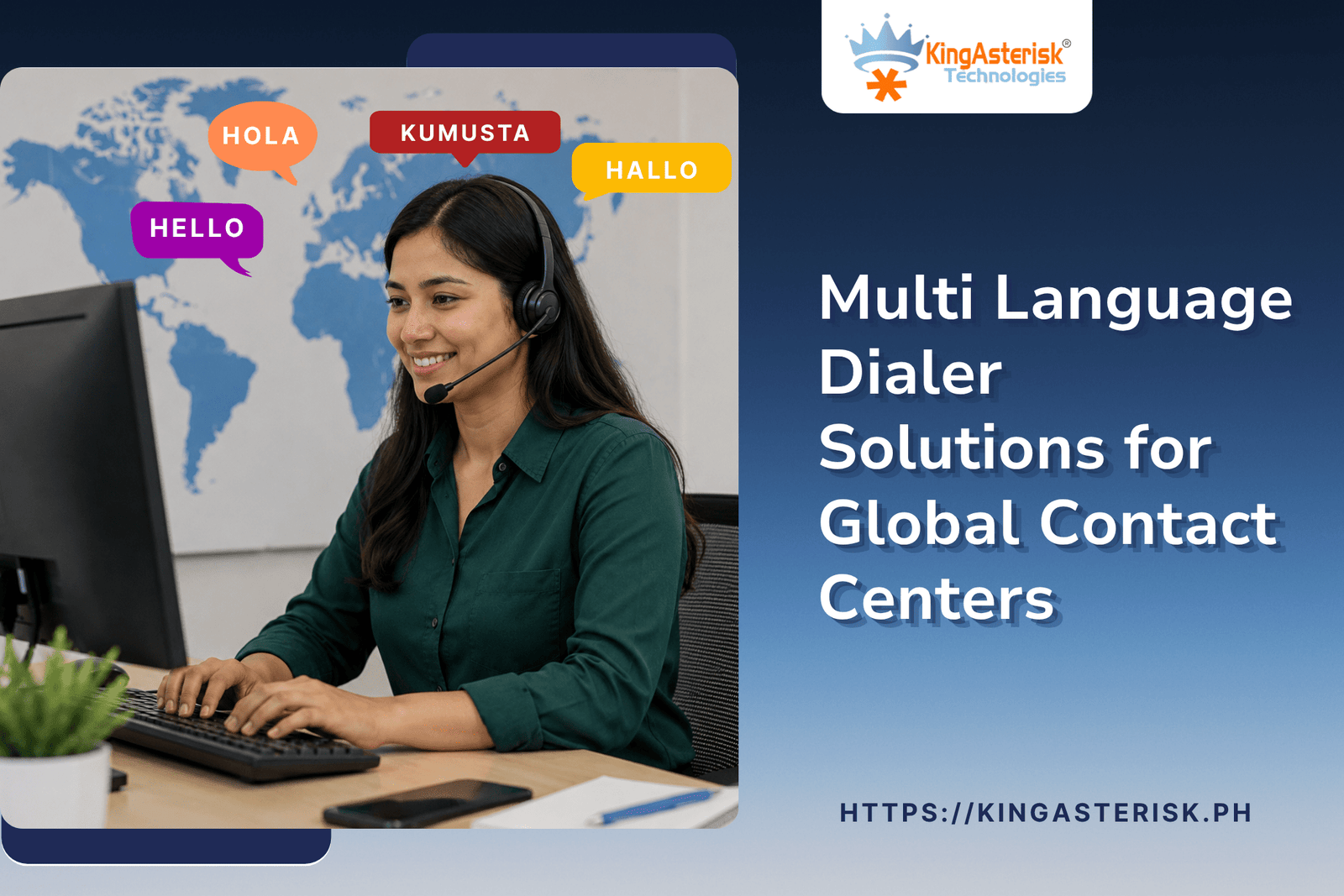
Multi-Language Dialer Solutions give contact centers the ability to route, script, and report on outbound and inbound campaigns in more than one language from a single dialing platform. For operators running teams that switch between English, Tagalog, Bisaya, and other regional languages within the same shift, this multilanguage dialer solves a very specific problem: agents were being manually rerouted, scripts were mismatched to caller language, and reporting was scattered across separate systems.
A properly configured multilingual dialer keeps every campaign, script, and metric under one roof, regardless of how many languages your floor speaks.
What Are Multi-Language Dialer Solutions?
A multi-language dialer is a campaign management system built to detect, route, and script calls according to the caller’s or agent’s preferred language, rather than treating every contact as a single-language event.
Instead of maintaining separate dialing environments for an English desk and a Tagalog desk, supervisors configure language rules once, and the system applies them automatically across every list, script, and disposition code. This is the core value behind Multi-Language Dialer Solutions: one operational view, multiple language experiences underneath it.
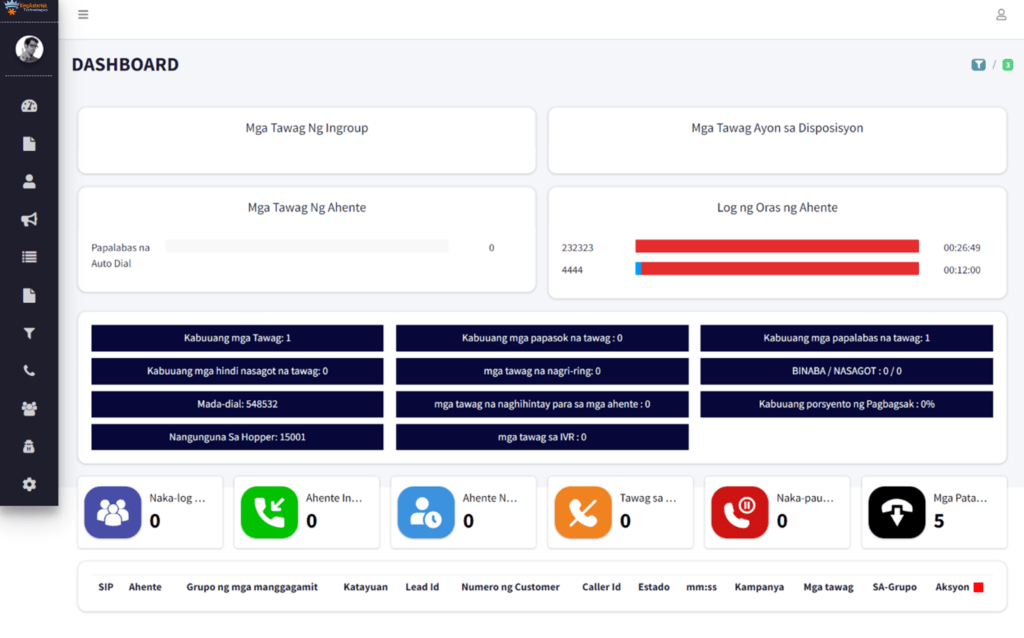
How Does a Multi-Language Dialer Work?
Mechanically, a multi-language dialer works by tagging three things: the contact record, the agent skill profile, and the script or prompt set. When a list is uploaded, each record can carry a language field pulled from customer data, area code, or previous interaction history. The dialer then matches that record to an agent whose skill profile includes the matching language, and pulls the correct script, IVR prompt set, and disposition list for that pairing.
On the inbound side, an IVR menu or automatic language detection step routes the caller before the connection ever reaches a live agent, so language mismatches are filtered out early rather than discovered mid-call.
Reporting follows the same logic. Every call is stamped with its language tag, so supervisors can pull performance data – connect rates, average handle time, conversion – broken down by language instead of digging through mixed reports by hand.
Why Philippine Contact Centers Need Multi-Language Dialer Solutions
The Philippines runs one of the largest outsourced contact center workforces in the world, and its language mix is rarely just English. Operators in Metro Manila, Cebu City, Davao,Antipolo and Iloilo regularly staff campaigns that blend English with Tagalog, Bisaya/Cebuano, Ilocano, or Hiligaynon, depending on the client base and target market.
Without a language-aware dialer, supervisors end up building duplicate campaigns, duplicate scripts, and duplicate reporting just to keep languages separated – which multiplies setup time and increases the chance of a Tagalog-speaking caller landing with an English-only agent.
A properly configured multilingual dialer removes that duplication. A single campaign in Cebu can serve English-preferred and Bisaya-preferred customers from the same agent pool, with the system routing each contact correctly and pulling the right script automatically.
Custom Language Configuration: Core Features
Language-Tagged Contact Lists
Lists are uploaded with a language field so the dialer knows, before the first ring, which script and agent pool a record belongs to.
Skill-Based Agent Routing
Agents are tagged by language fluency, and the dialer only connects them to matching contacts – reducing mishandled calls and repeat transfers.
Localized Scripts and IVR Prompts
Each language has its own script version and recorded IVR prompt set, so tone and terminology stay accurate instead of being translated on the fly.
Language-Level Reporting
Dashboards break down connect rate, talk time, and conversion by language, giving supervisors visibility into which desks need coaching or additional staffing.
What Is a Dialer in a BPO Setting?
In a BPO environment, a dialer is the system that places or manages calls on behalf of agents, following a defined pacing method so agent idle time is minimized without overwhelming available staff. It handles list management, call pacing, disposition tracking, and – in a multilingual setup – language routing on top of all of that. Think of it as the operational backbone that decides who gets called, when, by whom, and with which script.
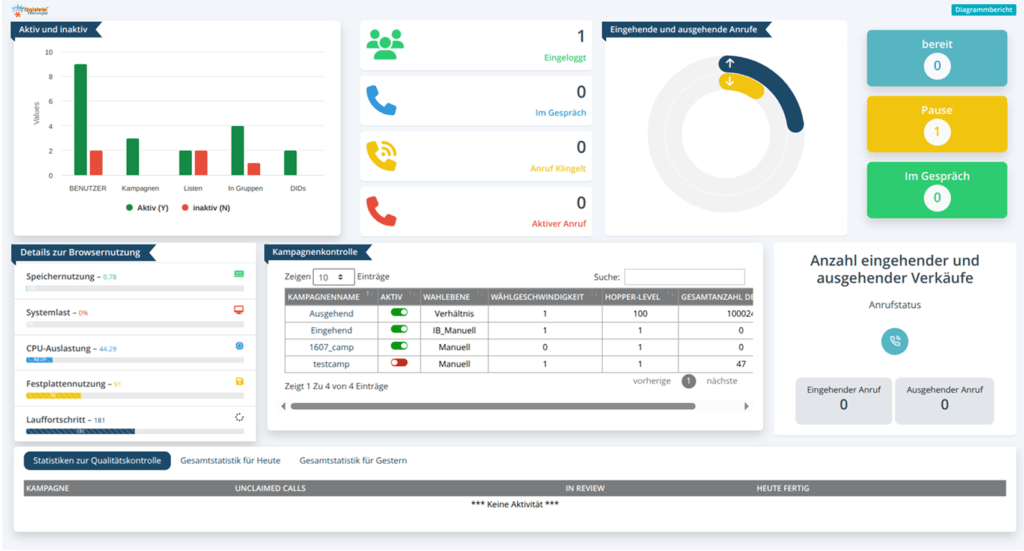
How Many Types of Dialers Are There?
Most contact center platforms support four core dialer modes, and a multilingual deployment can apply language rules to each of them:
Predictive Dialer – dials ahead of agent availability using pacing algorithms, ideal for high-volume outbound campaigns.
Progressive Dialer – dials one contact per available agent, useful when call quality matters more than raw volume.
Preview Dialer – shows agents the contact record before dialing, common for complex or compliance-heavy interactions.
Manual Dialer – agent-initiated calls, typically reserved for small lists or highly specialized follow-ups.
Language configuration layers on top of whichever mode a campaign uses, so a predictive campaign can still route strictly by language even at high dialing speed.
Which Dialer Setup Actually Performs Best?
There is no single dialer that wins for every operation – performance depends on call volume, compliance requirements, and language mix. What consistently performs well for Philippine multilingual operations is a predictive or progressive dialer paired with strict language-based skill routing: it keeps agent utilization high while making sure a Bisaya-speaking customer never lands with an English-only script. The ‘best’ dialer is the one configured correctly for your list composition, not a fixed product name.
Real-World Example: A Manila-Based Blended Campaign
A collections campaign based in Quezon City needed to reach customers across Metro Manila and Cebu, with roughly 40% preferring Bisaya over Tagalog or English. Rather than splitting the campaign into three separate dialing environments, the team configured one predictive campaign with language-tagged lists, three script versions, and skill-routed agent groups.
Connect-to-agent handling time dropped because contacts stopped bouncing between desks, and supervisors could finally see per-language performance in one dashboard instead of three.
Frequently Asked Questions
Which is the best dialer in the world❓
There isn’t one universal answer – the right choice depends on call volume, compliance needs, and language mix. For most Philippine multilingual operations, a predictive or progressive dialer configured with strict language-based routing delivers the best balance of speed and accuracy.
What is a dialer in BPO❓
In a BPO context, a dialer is the system responsible for placing or managing calls on behalf of agents, controlling pacing, list assignment, and disposition tracking. In a multilingual setup, it also handles language routing so contacts reach agents who speak their preferred language.
Can Multi-Language Dialer Solutions support more than two languages at once❓
Yes. There is no practical limit built into the routing logic itself – campaigns commonly run English, Tagalog, and Bisaya simultaneously, and additional languages can be added by tagging new lists, scripts, and agent skills.
Conclusion
Multi-Language Dialer Solutions solve a problem that most Philippine contact centers eventually run into: managing English, Tagalog, Bisaya, and other regional languages without fragmenting campaigns, scripts, or reporting.
With language-tagged lists, skill-based routing, localized scripts, and per-language reporting, supervisors in Manila, Cebu, and Davao can run one unified operation instead of several disconnected ones. If your current setup is still splitting languages into separate systems, it’s worth reviewing how a properly configured multilingual dialer could simplify that.
Reach out to our team to talk through custom language configuration for your specific campaign mix and list composition.