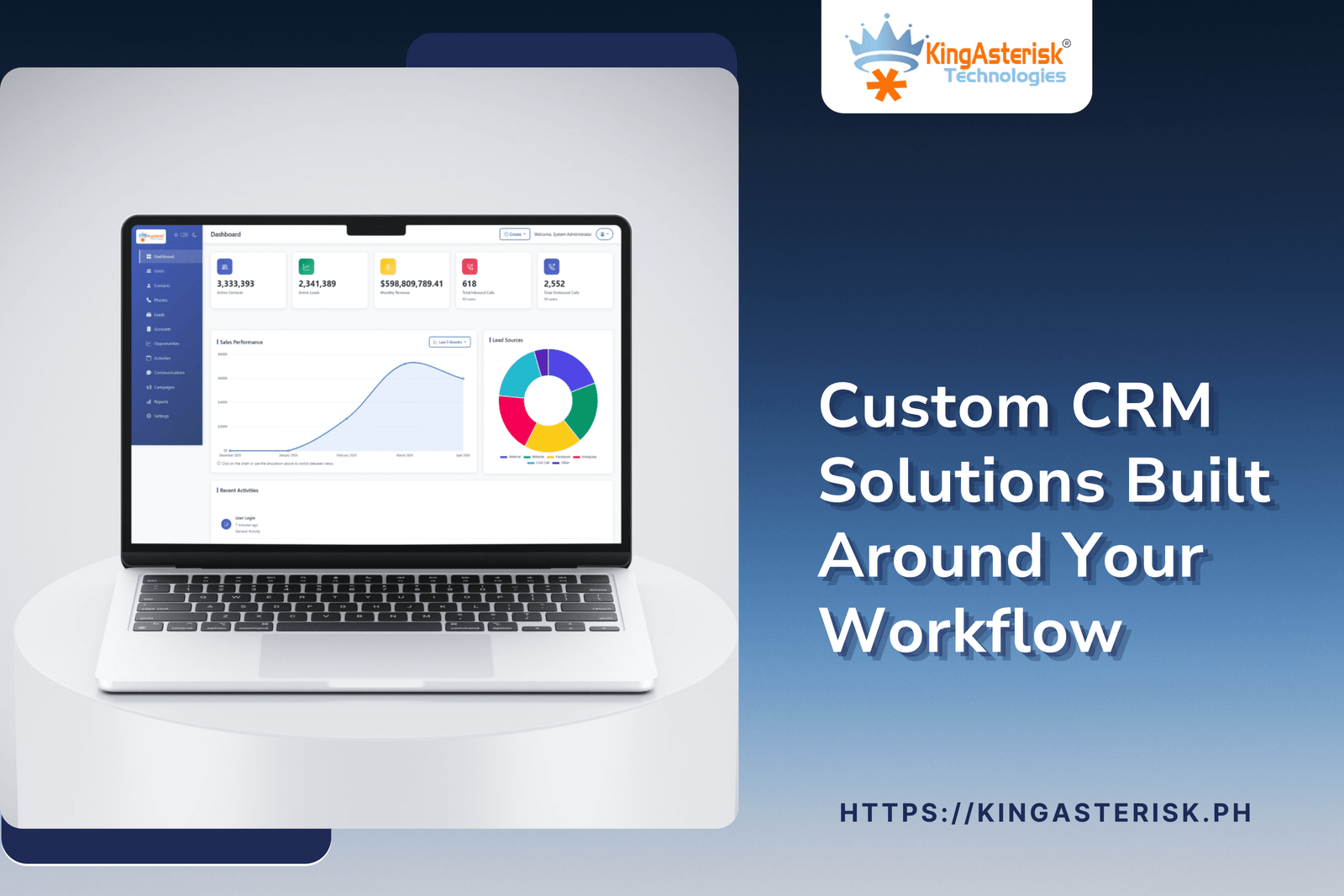
Custom CRM Development gives contact centers, sales teams, and service businesses a system that mirrors how they actually work, rather than a system they have to work around. Off-the-shelf platforms and even free open source CRM software for small business can handle basic contact management, but they rarely adapt to specific dialing scripts, agent hierarchies, compliance rules, or reporting needs that grow with your business.
This article breaks down what custom CRM development actually involves, how it differs from generic or open source CRM free tools, and how a dedicated development company builds systems that scale with your operations instead of limiting them.
What Is Custom CRM Development?
Custom CRM Development is the process of designing and building a customer relationship management system from the ground up, or substantially rebuilding an existing platform, so that every module reflects your team’s real workflow. Instead of forcing agents to adapt to rigid, pre-built fields and pipelines, a custom-built CRM is shaped around how leads actually move through your sales and support process.
For contact center operators specifically, this usually means the CRM needs to sit directly on top of dialer logic, IVR routing, and disposition codes – none of which a generic, one-size-fits-all platform is designed to handle out of the box.
Why Off-the-Shelf and Open Source Tools Fall Short at Scale
Free open source CRM software for small business is a reasonable starting point for a two – or three-person sales team. Tools built on open source CRM free frameworks give you basic contact records, deal stages, and email logging without licensing fees.
The friction shows up once a business scales past a handful of users. Contact centers running hundreds of agent seats need real-time disposition syncing, supervisor dashboards, campaign-level reporting, and integration with dialer and IVR systems – capabilities that most open source builds were never architected to support at that volume.
At that stage, businesses either spend months customizing an open source base themselves or hand that work to a development company that specializes in Custom CRM Development.
Common Signs You Have Outgrown a Generic CRM
- Agents manually re-entering disposition data between systems
- Reports that need to be stitched together from multiple exports
- No direct link between the CRM and your dialer or IVR platform
- A growing list of workarounds your team has built just to cope
Core Capabilities We Build Into Every Custom CRM
Dialer and IVR Integration
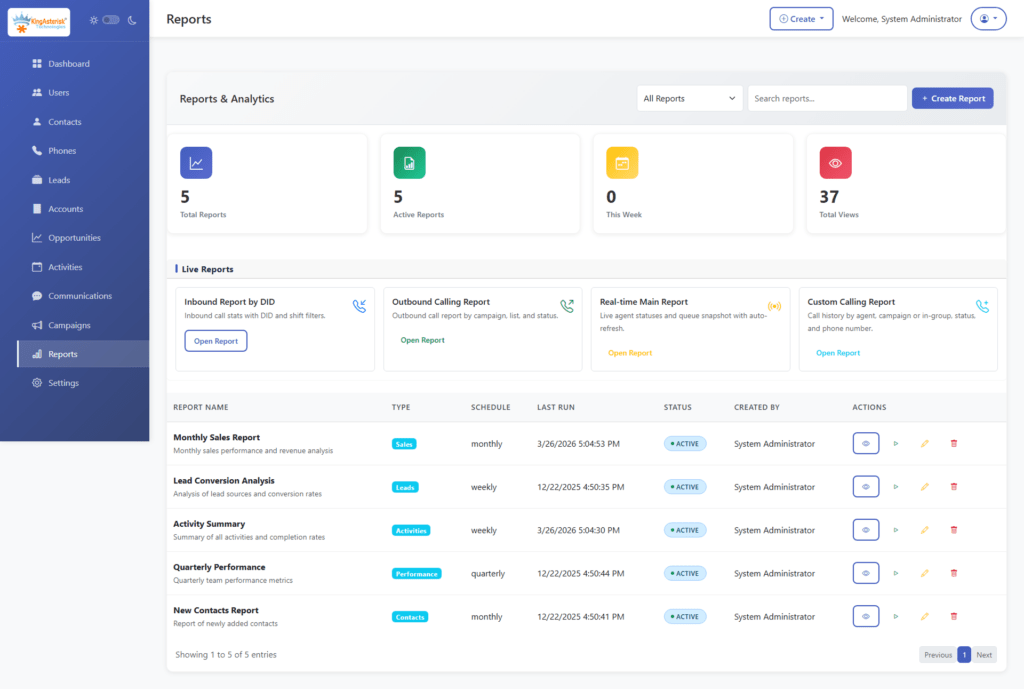
Every Custom CRM Development project we deliver connects directly to VICIdial and Asterisk-based systems, so agents see caller history, prior dispositions, and campaign notes the moment a call connects – without switching screens.
Full Access to CRM Source Code
Clients receive complete ownership of their CRM source code. There is no dependency on a third-party license, no recurring platform fee tied to seat count, and no restriction on future development, whether that work is handled by our engineers or an in-house team down the line.
Role-Based Dashboards and Reporting
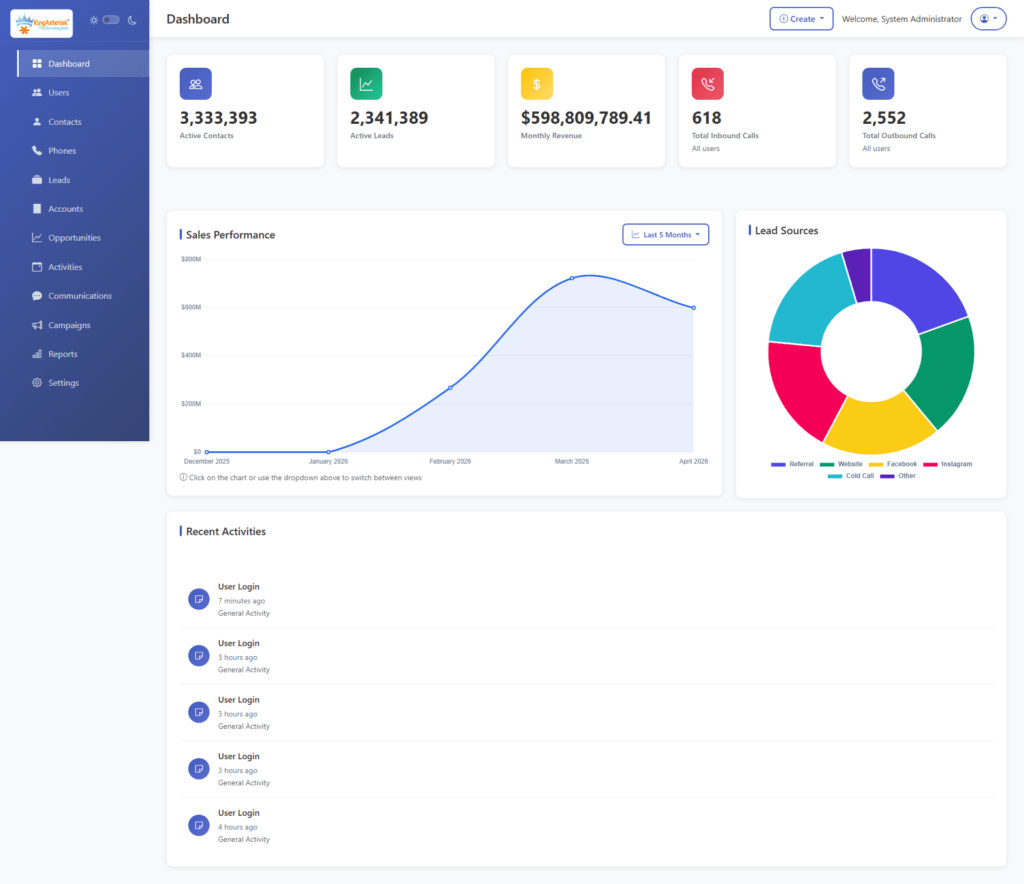
Supervisors, quality analysts, and agents each get views built around their actual job, not a single generic dashboard trying to serve everyone.
Custom CRM Development for Contact Centers: A Real-World Example
A mid-sized outbound collections operation running VICIdial across 150 seats came to us with a common problem: their existing CRM required agents to manually log every disposition twice – once in the dialer, once in the CRM – because the two systems did not talk to each other. Supervisors were pulling separate reports from each platform and reconciling them by hand at the end of each shift.
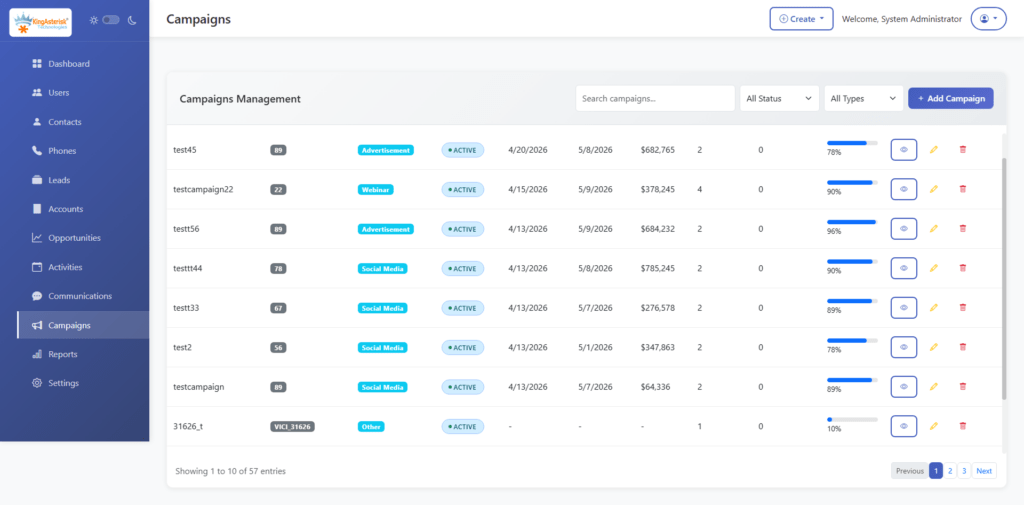
We built a Custom CRM Development solution that synced disposition codes, call recordings, and campaign notes directly from the dialer in real time, and added a supervisor dashboard showing live agent status alongside CRM activity. Manual reconciliation work dropped out of the daily routine entirely, and quality assurance teams gained a single source of truth for every account. This kind of workflow-first build is exactly what separates custom CRM development from a generic install.
Pairing CRM with Custom ERP Software Development
For businesses managing inventory, billing, or multi-department operations alongside their contact center, a standalone CRM only tells half the story. Custom ERP software development services extend that same workflow-first approach into finance, procurement, and operations, so sales activity in the CRM and order or billing data in the ERP system stay in sync automatically.
We have delivered ERP CRM system development projects for clients where a single custom build replaced four disconnected tools, and customized ERP development company engagements for United States-based operations teams who needed compliance and reporting structures specific to their regulatory environment.
Why Choose KingAsterisk as Your CRM Development Company
KingAsterisk is a software development company with hands-on experience deploying VICIdial, Asterisk, and IVR systems for contact center operators across multiple countries. As a CRM solutions company, our engineering team does not start from a template – every Custom CRM Development engagement begins with mapping your actual call flows, agent structure, and reporting requirements before a single line of code is written.
Businesses evaluating a CRM development company often compare cost against capability. Our position is straightforward: you get a dedicated engineering team, complete source code ownership, and direct dialer-level integration experience that generic development company shops typically do not have, at rates that remain competitive against top CRM development company alternatives in other regions.
Frequently Asked Questions
Can a custom CRM integrate with our existing VICIdial or Asterisk setup❓
Yes. Direct dialer and IVR integration is one of the most requested features we build, since it lets agents see caller history and disposition data in one screen instead of switching between systems. This is typically the first integration we scope in any Custom CRM Development project.
Do we own the CRM source code after development❓
Yes, full source code ownership transfers to the client at project completion. This means no recurring licensing dependency and complete freedom to extend the system with our team or an in-house team later.
Is open source CRM free software a good starting point before going custom❓
For very small teams, yes. Open source CRM free tools work well until reporting, integration, or compliance needs outgrow what the base platform supports. Many clients start there and move to a custom build once agent count or integration complexity increases.
How long does a typical custom CRM development project take❓
Timelines vary with scope, but a contact center-focused CRM with dialer and IVR integration typically takes several weeks to a few months from requirements mapping to deployment, depending on the number of integrations and reporting modules required.
Conclusion
Custom CRM Development is not about adding more software to your stack – it is about replacing disconnected tools and manual workarounds with one system built around how your team already works. Whether you are outgrowing a free open source CRM software for small business setup or looking to pair CRM and ERP development into a single operational view, the right build should reduce agent workload, not add to it.
If you are evaluating a CRM development company for your next project, KingAsterisk’s engineering team has direct experience integrating custom CRM systems with VICIdial, Asterisk, and IVR platforms for contact center operators worldwide. Reach out to our team to talk through your workflow and get a project scope built around it.