
Predictive dialer software is the pacing engine that decides how many outbound calls to place for every available agent, then filters out unanswered numbers, busy signals, and machine pickups. For contact centers running high-volume outbound work, this one Predictive Dialer Solution component decides whether agents spend a shift talking to real people or listening to ring tones.
This guide covers how predictive dialer software actually calculates pacing, what separates a well-tuned system from a compliance risk, and how operations in the US and the UK should each approach dialer selection.
What Is Predictive Dialer Software?
It sits between an agent roster and the telephony network, dialing several numbers at once based on statistical models of agent availability, historic connect rates, and average handle time. Instead of waiting for an agent to wrap one call before dialing the next number, the system predicts – using a rolling average – the exact moment a seat will open up, then times the next batch of dials to land right as that happens.
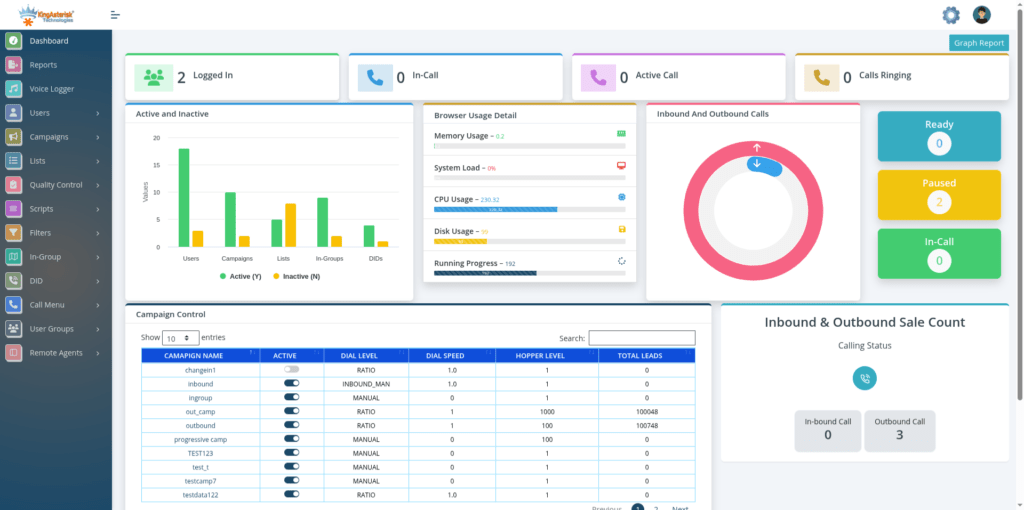
Inside a platform such as VICIdial, this pacing logic runs continuously against live queue data: agents logged in, calls already in progress, and abandonment counts from the last few minutes. The dial ratio recalculates every few seconds instead of sitting on a fixed multiplier set once at the start of a shift. That distinction – constant recalculation versus a static setting – is what separates a genuine predictive engine from a simple auto dialer with a higher call count.
How the Pacing Engine Actually Works
Live Line Ratios and Agent Availability
The core formula weighs three inputs continuously: the number of agents currently free, the average time it takes a call to connect, and the abandonment rate from recent dials. A dialer system running at a 2.5 line-to-agent ratio isn’t a fixed rule – it adjusts upward when connection rates fall in the afternoon and pulls back the moment more calls start reaching voicemail than people.
Real-Time Dialing Control
The dialer keeps track of agent availability, live calls, and campaign activity throughout the day. As more agents become available, it can place calls more quickly. If agents are busy or more customers start answering, it slows down the dialing speed to reduce abandoned calls. With the right campaign setup and dialing configuration, you can maintain a steady and efficient outbound calling process.
Predictive Dialer vs Progressive Dialer vs Auto Dialer
These three terms get used interchangeably, but they behave very differently on a live campaign:
- Auto dialer – dials one number per agent, one at a time, with no pacing math involved.
- Progressive dialer – dials the next number only once an agent is confirmed free, keeping a 1:1 ratio with zero overlap.
- Predictive dialer – dials ahead of agent availability using a calculated ratio above 1:1, trading a small, controlled abandonment risk for meaningfully higher talk time.
A predictive dialer example makes this concrete: on a list with a 20% connect rate, a progressive dialer leaves agents idle between calls, while a correctly tuned predictive dialer keeps two or three lines ringing per free seat so a live contact is almost always ready the second an agent finishes their previous call.
Choosing the Best Dialer for USA Calling and Cold Calling
Teams searching for the best dialer for USA calling or the best dialer for cold calling are usually optimizing for two things at once: connect volume and regulatory safety. A US dialer built for cold outreach needs configurable abandonment caps, time-zone-aware calling windows tied to area code, and detailed dial-disposition logging that can be pulled for an audit without extra engineering work.
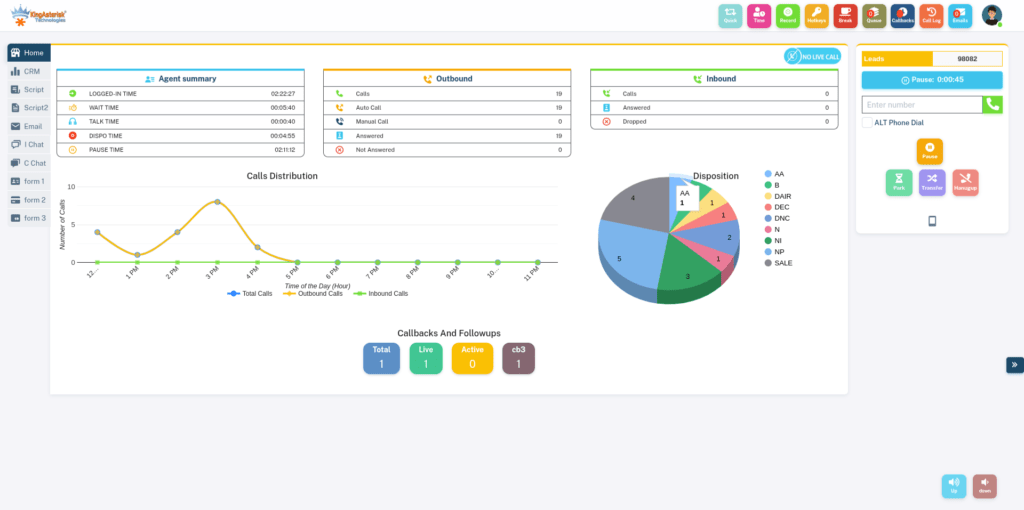
For teams weighing options, the deciding factor rarely comes down to raw dialing speed – most systems can hit similar connect rates. It comes down to how easily supervisors can adjust pacing mid-shift, how granular the reporting is per list and per campaign, and how well the dialer system integrates with existing scripting and lead-management tools already in use.
Predictive Dialer Systems for UK Operations
A UK dialer has to work within Ofcom’s abandonment-rate ceiling and the associated silent-call reporting requirements, which are stricter in some respects than US rules. Dialer systems deployed for UK campaigns typically run a lower default line ratio and log abandonment figures per campaign per day, since regulators expect that data to be available on request rather than reconstructed after the fact.
Contact centers running both US and UK campaigns from a single platform benefit from software that lets each campaign carry its own compliance profile, rather than applying one blanket configuration across every list.
Real-World Use Case: An 85-Seat Recovery Campaign
An 85-agent contact center running a payment-recovery campaign switched from a fixed-ratio auto dialer to a properly configured predictive engine. Agent idle time between calls dropped from roughly 40 seconds to under 8 seconds once the pacing engine began recalculating every 15 seconds instead of every shift.
Answering machine detection was returned specifically for the campaign’s list – largely mobile numbers with high voicemail rates – which cut false connections to agents by close to a third. The combined effect was a measurable rise in daily completed conversations without increasing headcount or extending shift hours.
Frequently Asked Questions
What is the best predictive dialer❓
There’s no single best dialer for every operation – the right choice depends on campaign volume, compliance region, and how well it integrates with existing lead and CRM systems. Platforms built on VICIdial are widely used because they offer granular pacing control, detailed reporting, and flexible deployment for both US and UK requirements.
Are predictive dialers legal❓
Yes. What’s regulated is how it’s configured and used: abandonment-rate limits under TCPA-related guidance in the US and Ofcom rules in the UK. The technology is legal in the US and UK when configured within regulatory limits – proper abandonment-rate caps, required identification messages, and honored calling-time windows. Legal risk comes from misconfigured settings, not from using the technology itself.
How much does a predictive dialer cost❓
Cost varies with seat count, telephony route capacity, and support needs rather than license price alone. Open-source options are free at the software level, but reliable production use still requires infrastructure, connectivity, and configuration expertise, all of which factor into the real total cost.
What’s the difference between a predictive dialer and a progressive dialer❓
A progressive dialer dials one number only after confirming an agent is free, keeping a strict 1:1 ratio. A predictive dialer dials ahead of confirmed availability using a calculated ratio above 1:1, increasing talk time at the cost of a small, controlled abandonment rate.
Conclusion
Predictive dialer software only pays off when the pacing math, answering machine detection, and compliance settings are tuned to the specific list and region being called – not left on factory defaults. Whether the goal is the best dialer for cold calling in the US or a compliant UK dialer setup, the underlying engine matters less than how precisely it’s configured for the campaign in front of it.
KingAsterisk has spent years deploying and tuning this technology for contact centers of every size, on VICIdial and Asterisk-based systems built for exactly this kind of workload. Reach out to our team to talk through your current dial ratios, list mix, and compliance requirements.
Author Note:
Written by KingAsterisk’s senior telephony engineering team, based on hands-on deployment and tuning experience across VICIdial and Asterisk-based predictive dialer systems for contact centers in the US and UK.